


 Commercial Electrical Safety
Electrical Safety for Stadiums: Complete Guide
 Marcus Vance
 Nov 01, 2026
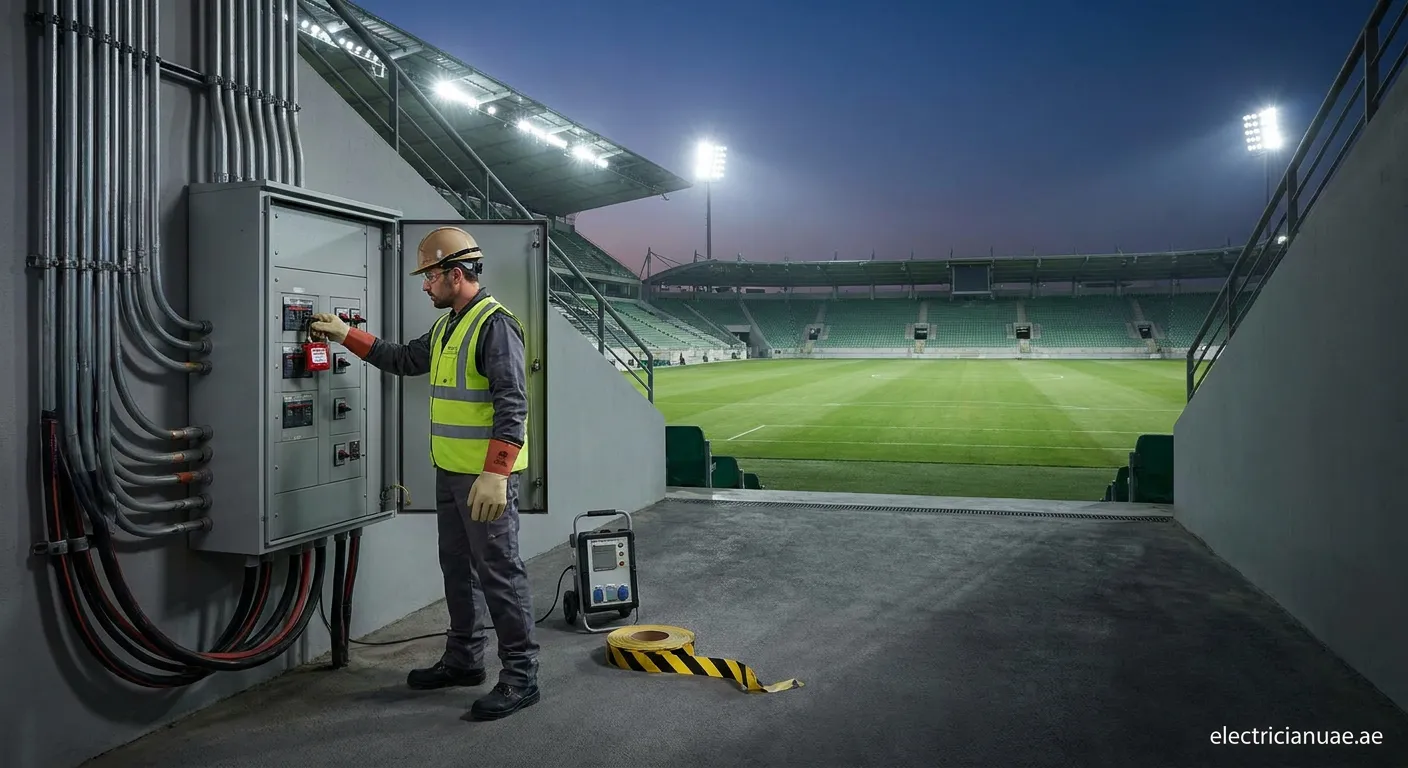
Ensuring electrical safety for stadiums is vital for protecting thousands of spectators and athletes while maintaining flawless sports venue power systems.
Critical Fundamentals of Stadium Electrical Infrastructure
Large-scale sports arenas demand immense electrical capacity to operate floodlights, broadcast equipment, scoreboards, and ventilation. Implementing strict electrical safety for stadiums ensures that complex high-voltage networks remain completely isolated from spectator concourses and athlete locker rooms. Stadium facility managers must oversee high-voltage transformers, switchgears, and power distribution units daily to prevent sudden thermal overloads or arc flash hazards.
Essential Protocols for Electrical Safety in Sports Venues
Modern arenas must adhere to strict building and electrical safety codes to guarantee continuous crowd protection during major events:
- Redundant Power Distribution: Dual utility substations combined with automated uninterruptible power supply (UPS) systems prevent dangerous sudden blackouts during peak attendance.
- Grounding and Lightning Protection: Massive steel stadium canopies require dedicated lightning dissipation arrays and equipotential earthing grids to divert atmospheric discharges safely away from seats.
- RCD and GFCI Integration: Heavy-duty residual current devices and ground fault circuit interrupters protect stadium concession areas, outdoor media compounds, and temporary stage setups.
"A resilient stadium electrical design must prioritize rapid circuit isolation and failsafe redundancy across all spectator-accessible zones."
Floodlighting and Broadcast Power Reliability
High-intensity arena illumination creates significant electrical loads. Dedicated circuits with surge protective devices (SPDs) safeguard sensitive LED driver arrays against voltage spikes. Simultaneously, broadcast compounds require isolated transformer feeds with clean harmonic-filtered power to prevent interference and circuit tripping during global sports broadcasts.
Routine Maintenance and Emergency Prevention
Proactive maintenance routines are critical for long-term stadium safety compliance:
- Thermal Imaging Audits: Routine infrared thermography scans switchboards and high-capacity breakers under full event loads to identify hot spots before component failure occurs.
- Emergency Egress Lighting Testing: Automated monthly tests verify that battery-backed emergency egress pathway illumination provides mandatory lumens along evacuation corridors.
- Ingress Protection (IP) Upgrades: All outdoor arena junction boxes, floodlights, and turnstile feeds must maintain minimum IP65 or IP66 weatherproof ratings against extreme weather.
Safe Temporary Power Deployment for Concerts
When stadiums host entertainment tours, external electrical tie-ins for audio, rigging, and stage effects introduce unique risks. Certified venue electricians must inspect all temporary feeder cables, ensure secure cable ramps to prevent physical wear, and balance phased loads across generator banks to maintain total venue safety.
Ensuring Long-Term Arena Safety
Maintaining high electrical standards prevents costly failures. For rapid response and venue maintenance, check our Short-circuit-repair Masdar City team ready to ensure total power reliability.
 Electrical Safety, Stadium Power, Sports Venues, Facility Safety
